Ego-Involvement vs. Task-Involvement

Ego-Involvement vs Task-Involvement
To understand why placing a grade alongside a comment can be unhelpful, we need to distinguish between two different reactions that feedback can trigger in a student. There are certainly situations where you're required to give both a grade and a comment, and this lesson isn't asking you to abandon that entirely, but it's worth understanding exactly what that combination does to a student's focus.
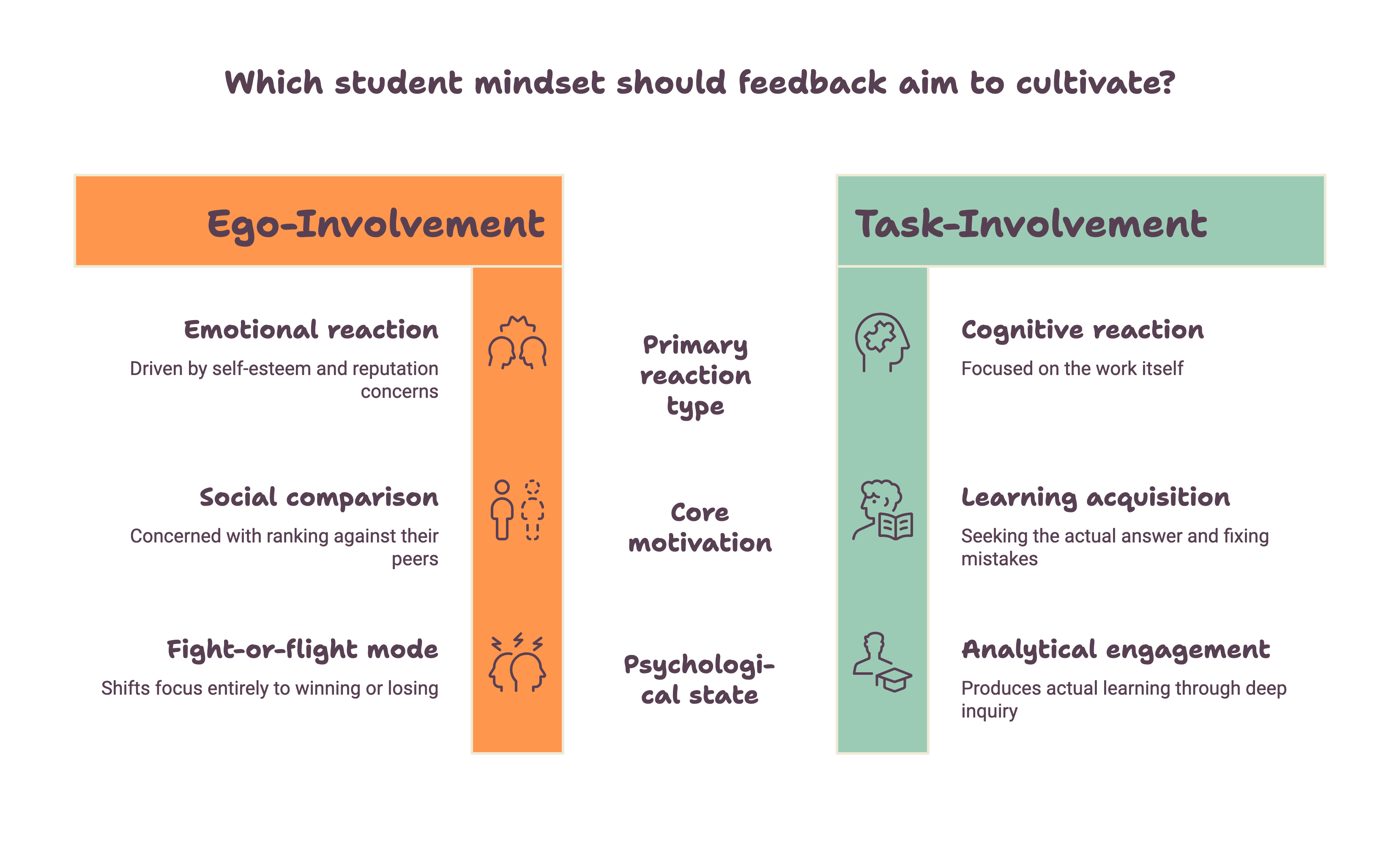
Ego-Involvement
This is an emotional reaction rather than a cognitive one. The student becomes concerned with their self-esteem, their reputation, and how they rank against their peers. They enter something close to fight-or-flight mode, where the focus shifts entirely to comparison: if I beat you, great, if you beat me, how do I explain that away?
A student in this state isn't thinking about the work at all. They're thinking about themselves in relation to everyone else in the room.
Task-Involvement
This is a cognitive reaction. The student stays focused on the work itself, asking questions like what's the actual answer here? or how do I fix this mistake? This is the reaction that actually produces learning, and it's the one every piece of feedback should be aiming for.
The Four Reactions to Feedback
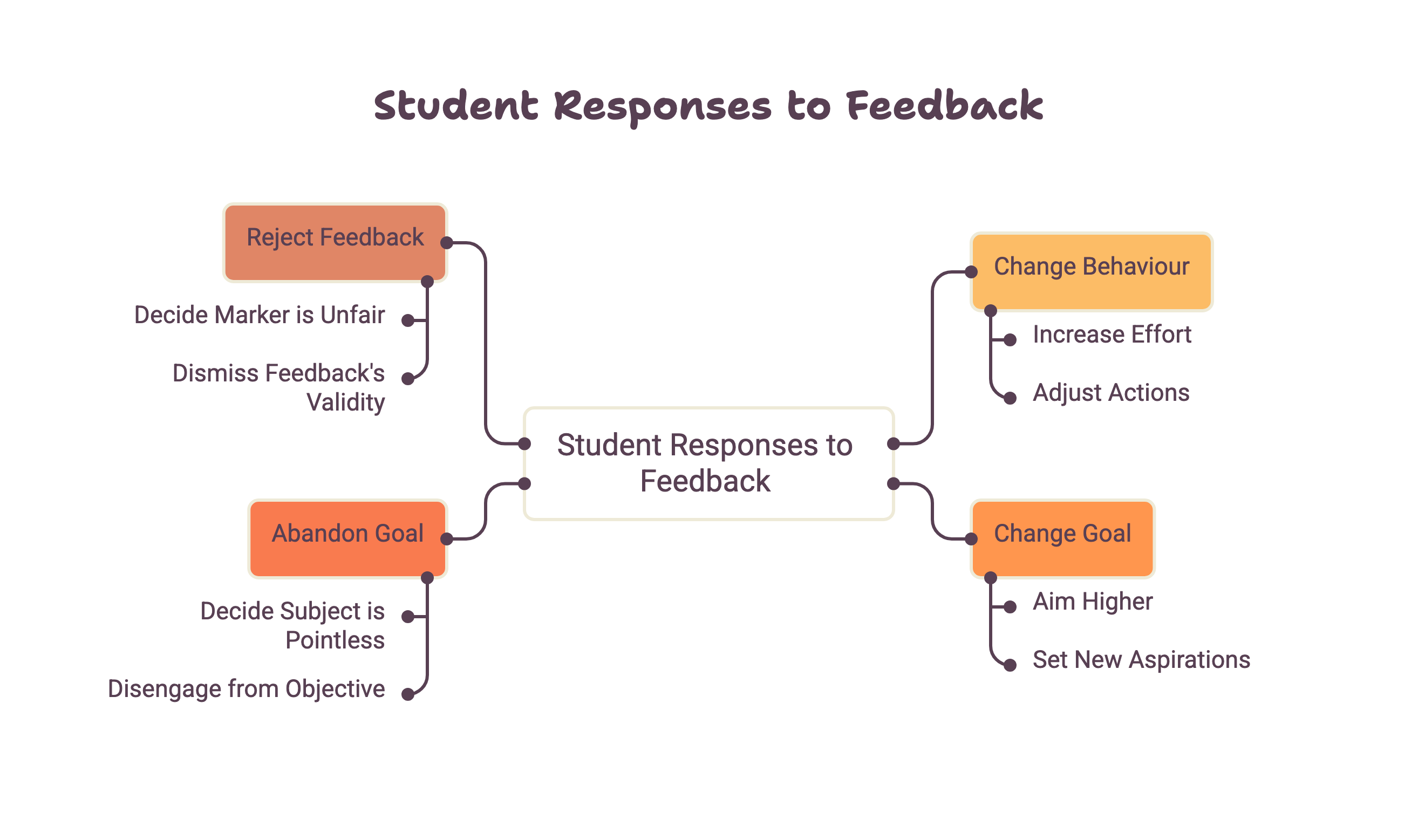
Back in the Feedback Paradox, we mentioned that Kluger and DeNisi's review turned up more than one surprising result. Here's the second: they found there are really only four things a student can do once they've received feedback.
- Change their behaviour (increase their effort).
- Change their goal (aim higher).
- Abandon the goal entirely.
- Reject the feedback outright.
Ego-involvement is likely to lead to one of the last two. To protect themselves, a student might abandon the goal by deciding the subject itself is pointless ("Maths is stupid"), or reject the feedback by deciding the person marking it is being unfair ("My maths teacher is stupid"). Either way, nothing about their work actually improves.
This is exactly what played out in the Butler study. A grade completely polarised the class: high achievers felt good and were happy to carry on, low achievers felt bad and wanted to stop and do something else entirely. In both cases, the grade had shifted focus away from the work and onto the student's sense of themselves, and the result was zero overall gain in achievement.
The Comments Only group told a different story. Both high and low achievers stayed interested in the task and motivated to keep going, because there was nothing to compare, only something to act on.
Keeping Students in Task-Involvement
Since you may still be required to give a grade alongside your comments, one effective way to manage this is to withhold the grade until after the student has read and reflected on the written feedback. (Nurture Assessments makes it straightforward to withhold a grade until feedback has been reviewed, if this is something you'd like to build into your own workflow.) If you'd like to see this in action, email emer@gonurture.com.
Delaying the grade this way keeps the student in task-involvement for long enough to actually engage with what you've written, rather than jumping straight to their score and moving on. The goal is always to get students thinking rather than reacting, and to keep their attention on improving the work rather than protecting how they see themselves.
References
Kluger, A. N., & DeNisi, A. (1996). The Effects of Feedback Interventions on Performance. Psychological Bulletin, 119(2), 254–284.