The Feedback Paradox: Improving the Student, Not the Work

The Paradox of Feedback
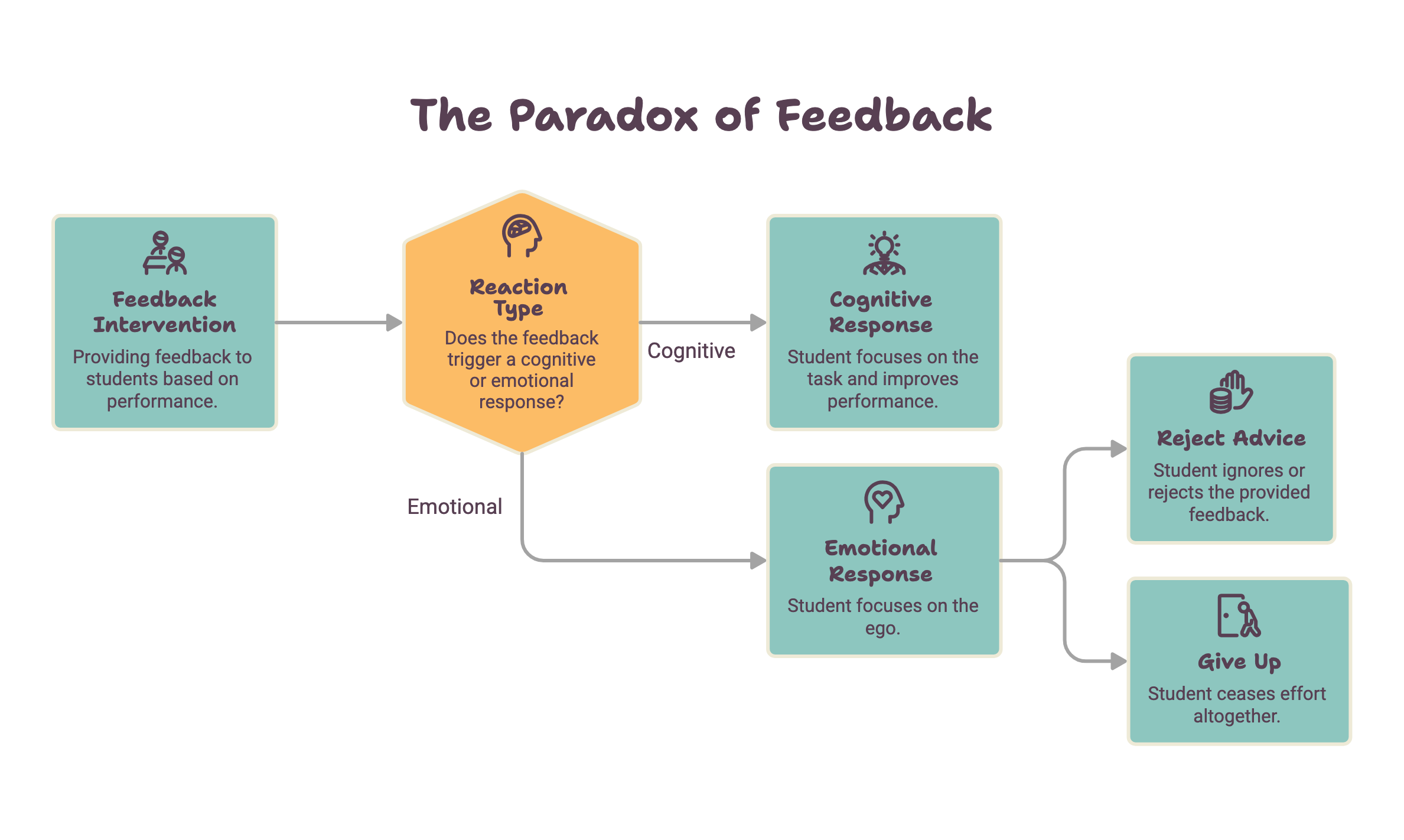
Consider this: in 1996, researchers Kluger and DeNisi published a landmark paper, The Effects of Feedback Interventions on Performance, reviewing over 3,000 studies on feedback. It's one of the most cited bodies of research on the topic. Their findings turned up more than one surprising result, and we'll come back to a second one later in this course. For now, here's the first: in 38% of well-designed experiments, giving feedback actually made student performance worse.
One of the main reasons this happens is that feedback often causes an emotional reaction rather than a cognitive one. It focuses on the ego rather than the task, and students end up rejecting the advice or giving up altogether.
The Medical vs. The Post-Mortem
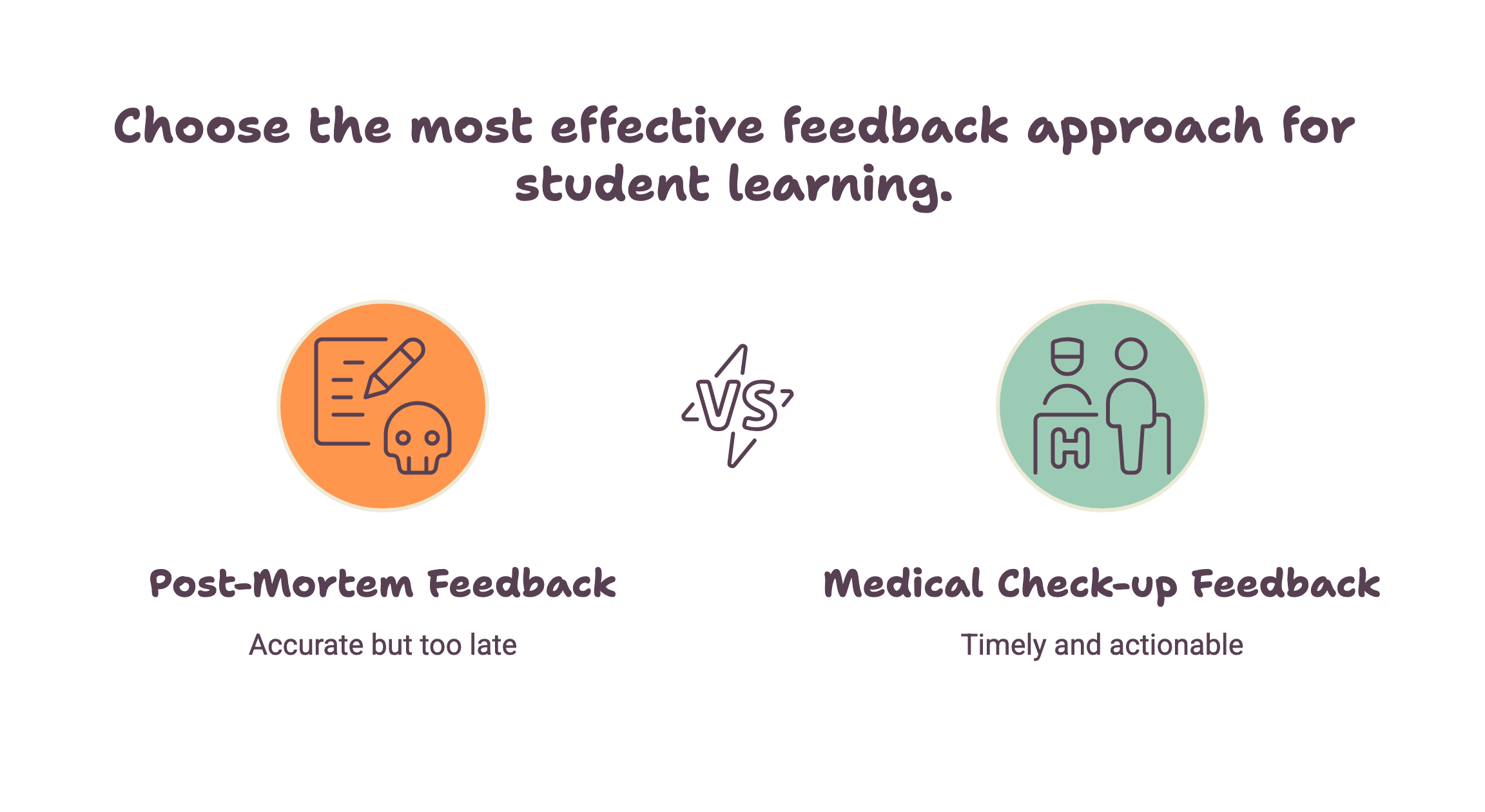
Douglas Reeves captures this problem well in Elements of Grading: A Guide to Effective Practice. Too often, the feedback we give students works like a post-mortem, an autopsy that explains why the patient died. It's accurate, but it comes too late to help.
Effective feedback should work more like a medical check-up instead: a diagnosis given while there's still time to act on it.
The Goal of This Course
In this course, based on the research of Professor Dylan Wiliam, you'll learn how to make that shift, from feedback that looks backward at what a student already handed in, to feedback that looks forward and genuinely changes what they do next. Over the next three modules, Wiliam's research will show you exactly how.