The Trap of Grading and The Butler Study

The Butler Study
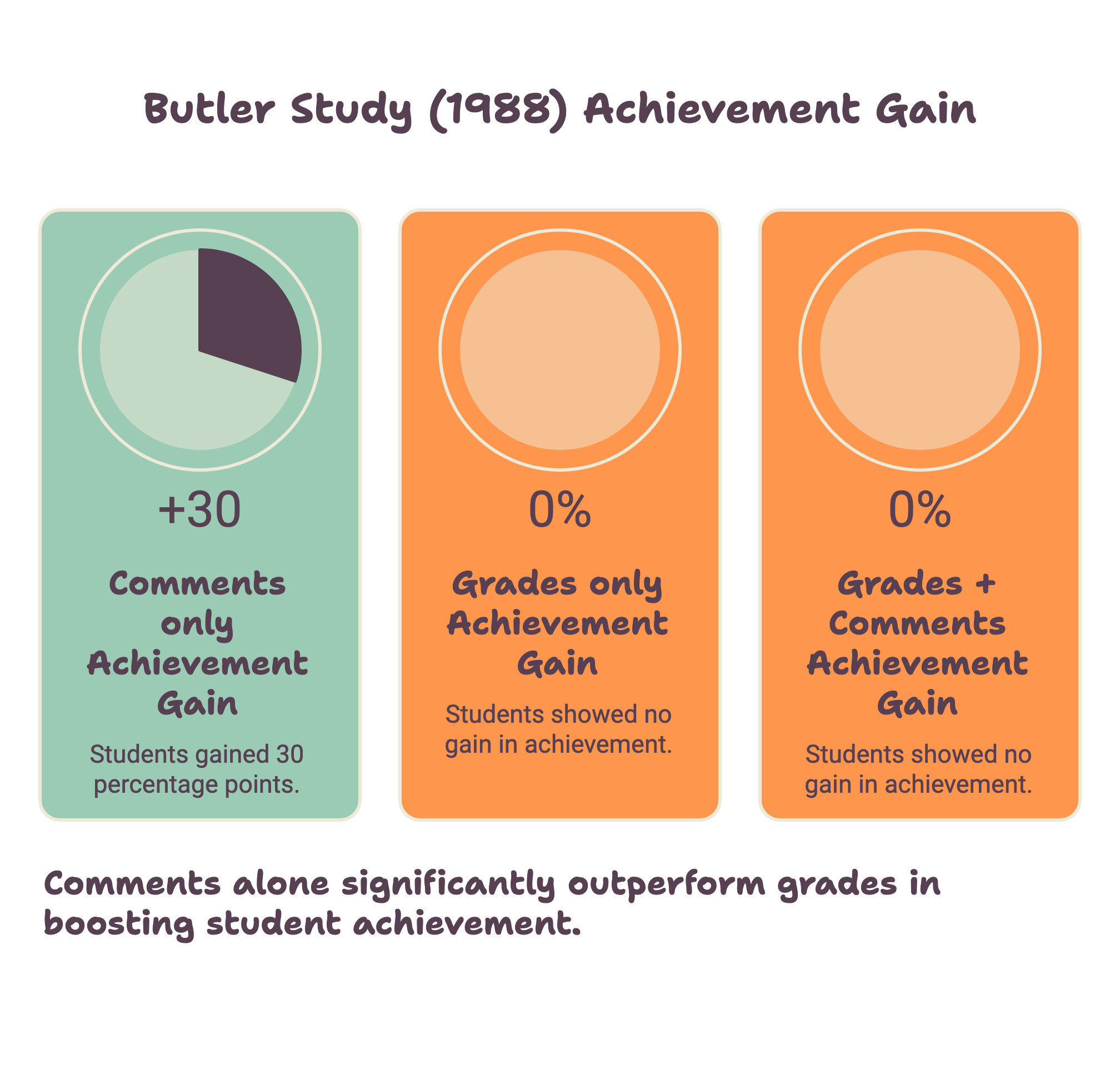
One of the studies Wiliam draws on is a 1988 experiment by Ruth Butler, involving 12 classes of students. Every class received the same teaching, the same aims, and the same classwork. The only difference was the feedback they were given:
- Grades Only: Students received a score, converted from a raw mark of 40–99 into a letter grade.
- Comments Only: Students received written, diagnostic comments with no score at all.
- Grades and Comments: Students received both.
The results were stark. Comments alone produced a 30 percentage point gain in achievement. Grades alone produced no gain. Grades and comments together also produced no gain, the grade wiped out any benefit the comment would have had on its own.
This is the finding behind the prediction you made earlier: giving students more information doesn't necessarily mean giving them more useful feedback.
What's Still Unanswered
Butler's result tells us what happens. It doesn't yet tell us why a grade has this effect on a student, or what's actually going on in their head when they see one. That's what we'll unpack next, in Ego-Involvement vs Task-Involvement.
References
Butler, R. (1988). Enhancing and Undermining Intrinsic Motivation: The Effects of Task-Involving and Ego-Involving Evaluation on Interest and Performance. British Journal of Educational Psychology, 58(1), 1–14.