Peer Learning and Every Student

Peer Learning and Every Student
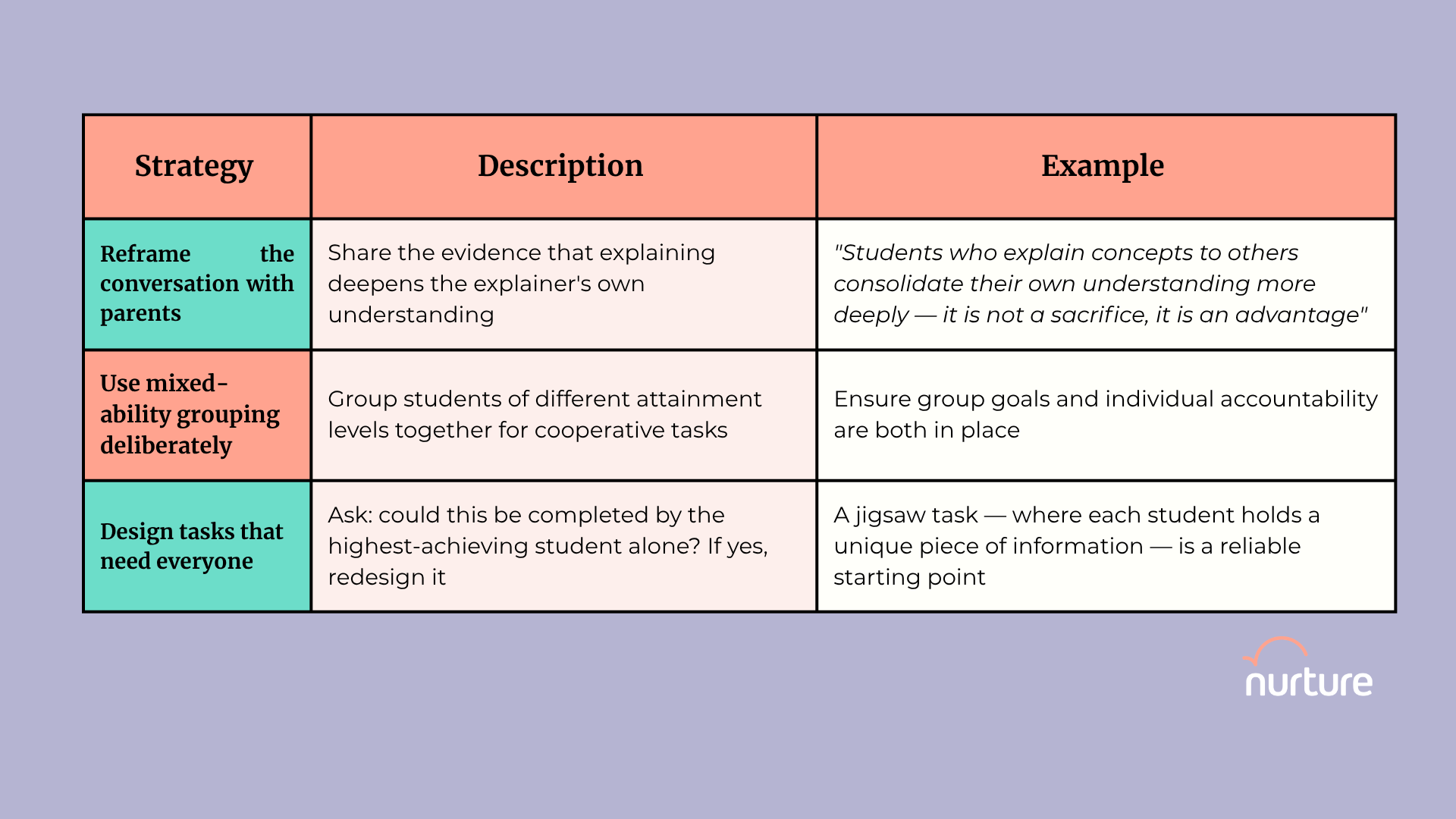
A concern that Dylan Wiliam encounters regularly — and that many teachers will have heard from parents — is that peer learning benefits lower-achieving students at the expense of higher-achieving ones. The worry is understandable. The research says otherwise.
What the Research Shows
Peer tutoring is one of the three most cost-effective strategies for closing the achievement gap identified by the Education Endowment Foundation — alongside feedback and metacognition. As Wiliam points out, all three are strategies of formative assessment.
Well-structured cooperative learning improves outcomes for students across the full range of prior attainment — not just those who are struggling.
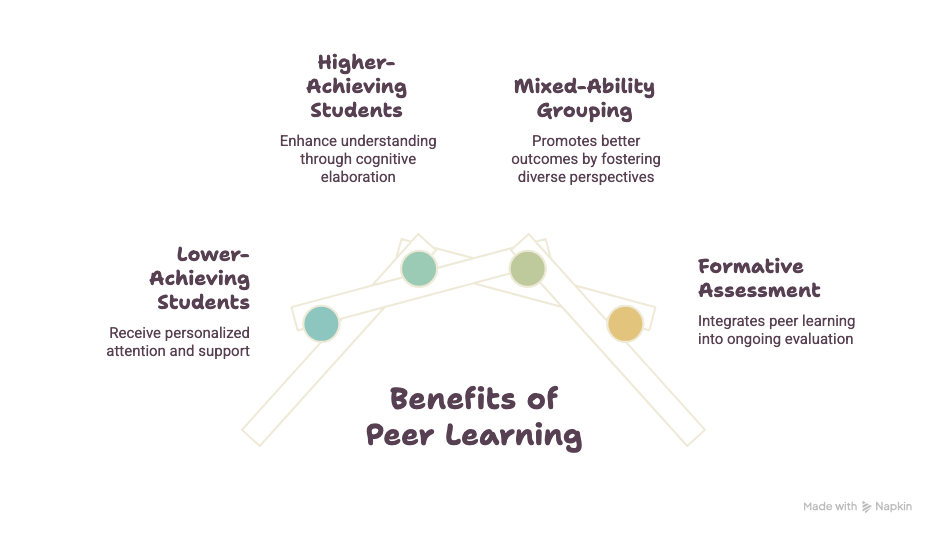
For lower-achieving students, the benefits are more obvious. Working with a peer who has recently navigated the same difficulty provides personalised attention that whole-class teaching cannot consistently offer.
For higher-achieving students, the mechanism is cognitive elaboration. Explaining a concept to someone else forces the explainer to think more carefully, make stronger connections and consolidate understanding in a way that simply knowing the answer does not require. As Wiliam puts it: "I never really understood this until I had to teach it." This is not a compromise — it is a genuine win for both groups.
A Note on Grouping
Mixed-ability grouping is generally preferable to ability grouping — not because it is more equitable in principle, but because it produces better outcomes in practice. The cognitive elaboration mechanism depends on students of different attainment levels working together. Ability grouping removes that opportunity.
The key question is never just who is in the group — it is always whether both conditions are in place.