Key Takeaways

Key Takeaways — Module 1: The Case for Self-Assessment
Before moving into Module 2, here's a quick recap of what we've covered in this module.
Self-assessment has a strong evidence base
Self-assessment isn't a soft, add-on activity. Multiple studies show it can meaningfully improve how students engage with their own learning — helping them set goals, clarify what they're aiming for, and take responsibility for their own progress. This impact depends on how self-assessment is implemented, particularly whether students are genuinely involved in shaping the process, rather than simply being handed a checklist.
Metacognition is a learnable skill, not a fixed trait
Metacognition — knowing what you know, what you can do, and monitoring your own thinking — develops with age and, more importantly, with explicit teaching. It isn't something students either have or don't have. Teaching approaches that build this skill are among the most cost-effective interventions available, but they only work if they're taught directly, not assumed.
Motivation determines whether students act on what they notice
Even a student with strong metacognitive awareness won't necessarily act on it. Boekaerts' dual-processing model shows that students can activate either a growth pathway, where they engage with closing gaps in their understanding, or a well-being pathway, where they prioritise protecting themselves from failure or embarrassment. Which pathway a student activates is shaped by classroom conditions — how goals are shared, how feedback is framed, and how much comparison between students is encouraged.
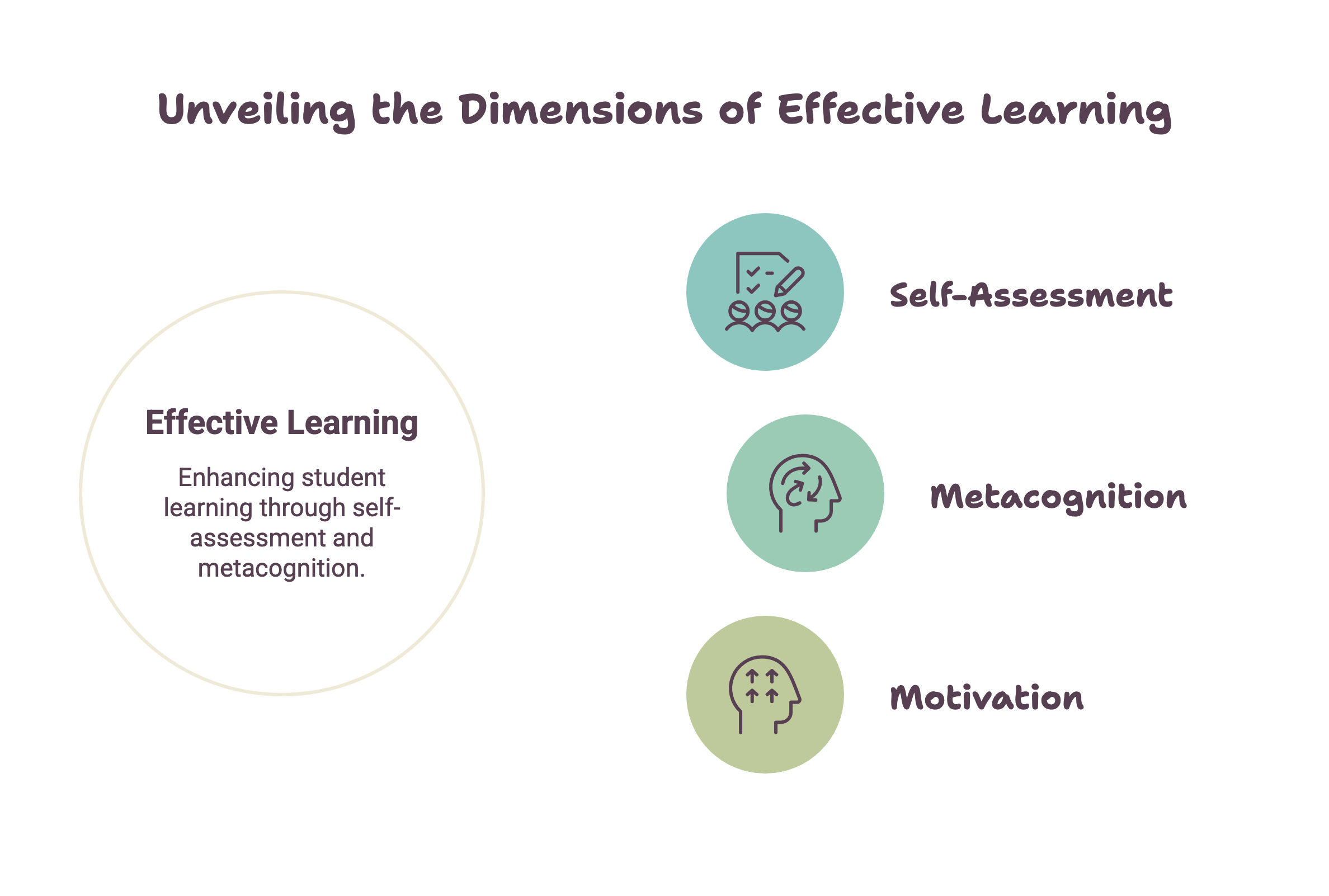
Where this leaves us
Together, these three ideas — evidence, cognition, and motivation — form the foundation for genuine student ownership of learning. Knowing this foundation matters, because Module 2 moves from theory into practice: specific, research-backed strategies you can use to put self-assessment, metacognition and motivation to work in your own classroom.