Motivation and the Growth Pathway

Motivation and the Growth Pathway
Understanding what a student knows and doesn't know is only useful if they're motivated enough to do something about it. A student can have excellent metacognitive awareness — they know exactly where the gaps are — and still choose not to close them. This lesson looks at what actually drives that choice, and how you can shift the odds in your favour.
Two Pathways, Not One Trait
It's tempting to think of motivation as something a student simply has or doesn't have — some kids are "motivated," others aren't. Monique Boekaerts offers a more useful way to think about it with her dual-processing model. Rather than treating motivation as a fixed trait, she describes two different pathways a student can activate in any given learning moment: a growth pathway, where the student is genuinely trying to build competence and close gaps in their understanding, and a well-being pathway, where the student's priority shifts to protecting themselves — from embarrassment, from failure, from looking less capable than their peers.
Every task, every piece of feedback, every self-assessment activity nudges a student toward one pathway or the other. A student on the growth pathway sees a gap in their understanding as something to close. The same student, tipped onto the well-being pathway, sees that same gap as a threat to be avoided — which is exactly why some students would rather not know how they did than face an honest answer.
Tipping the Scales
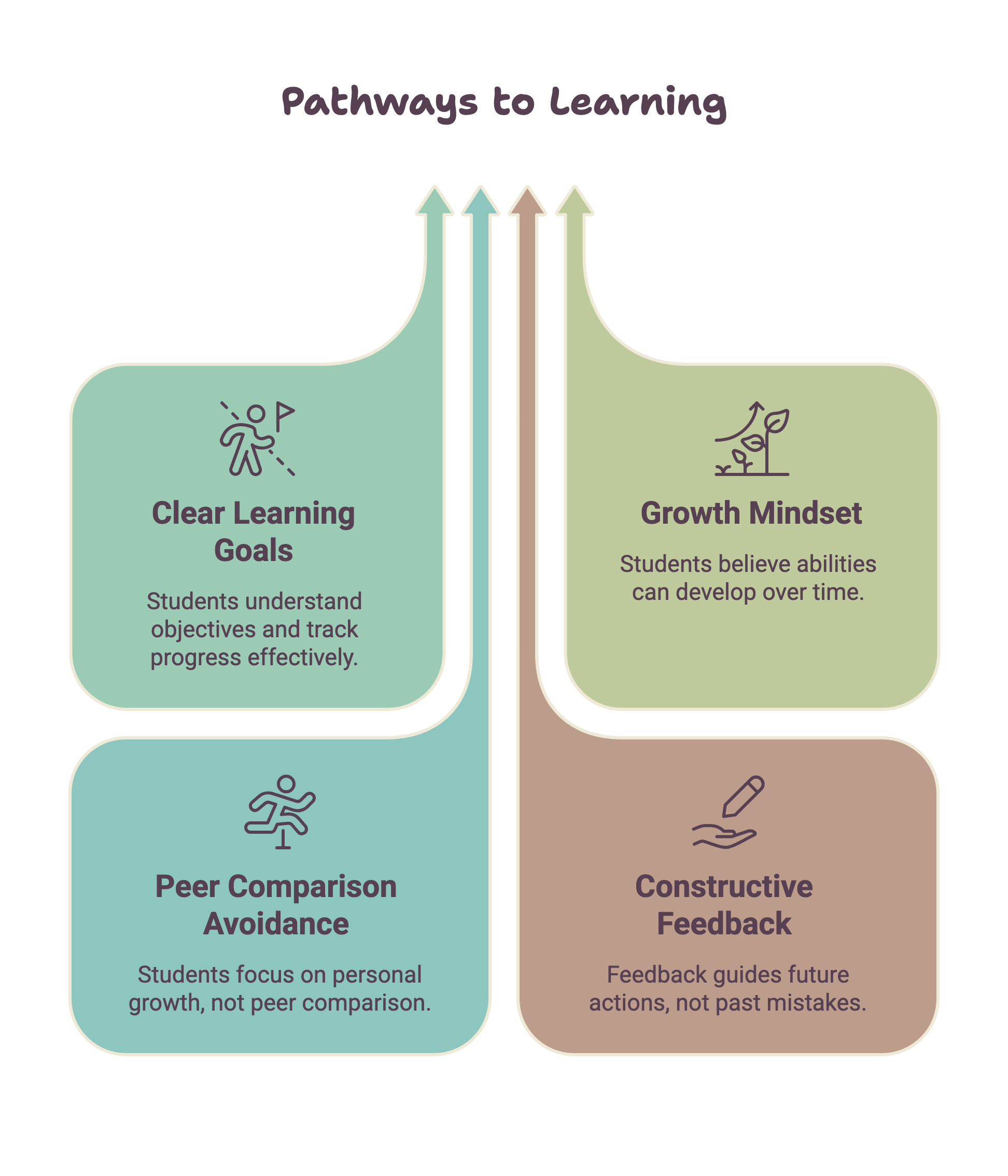
The good news is that which pathway a student activates isn't left to chance — it's shaped, in large part, by what happens in the classroom. A few things reliably help tip students toward the growth pathway: sharing learning goals clearly enough that students can actually track their own progress against them; promoting the belief that ability can grow rather than treating it as fixed; making it harder for students to compare themselves against each other rather than against their own progress; and giving feedback that reads like a plan for what to do next, rather than a verdict on what went wrong.
This last point connects directly back to self-assessment. A large study of over 1,500 students across 84 mathematics classrooms found that students who received this kind of forward-looking, constructive feedback from their teachers were more likely to focus on learning itself, rather than on how their performance compared to others. That shift — from "how did I do?" to "what do I do next?" — is the growth pathway in action.
Bringing Module 1 Together
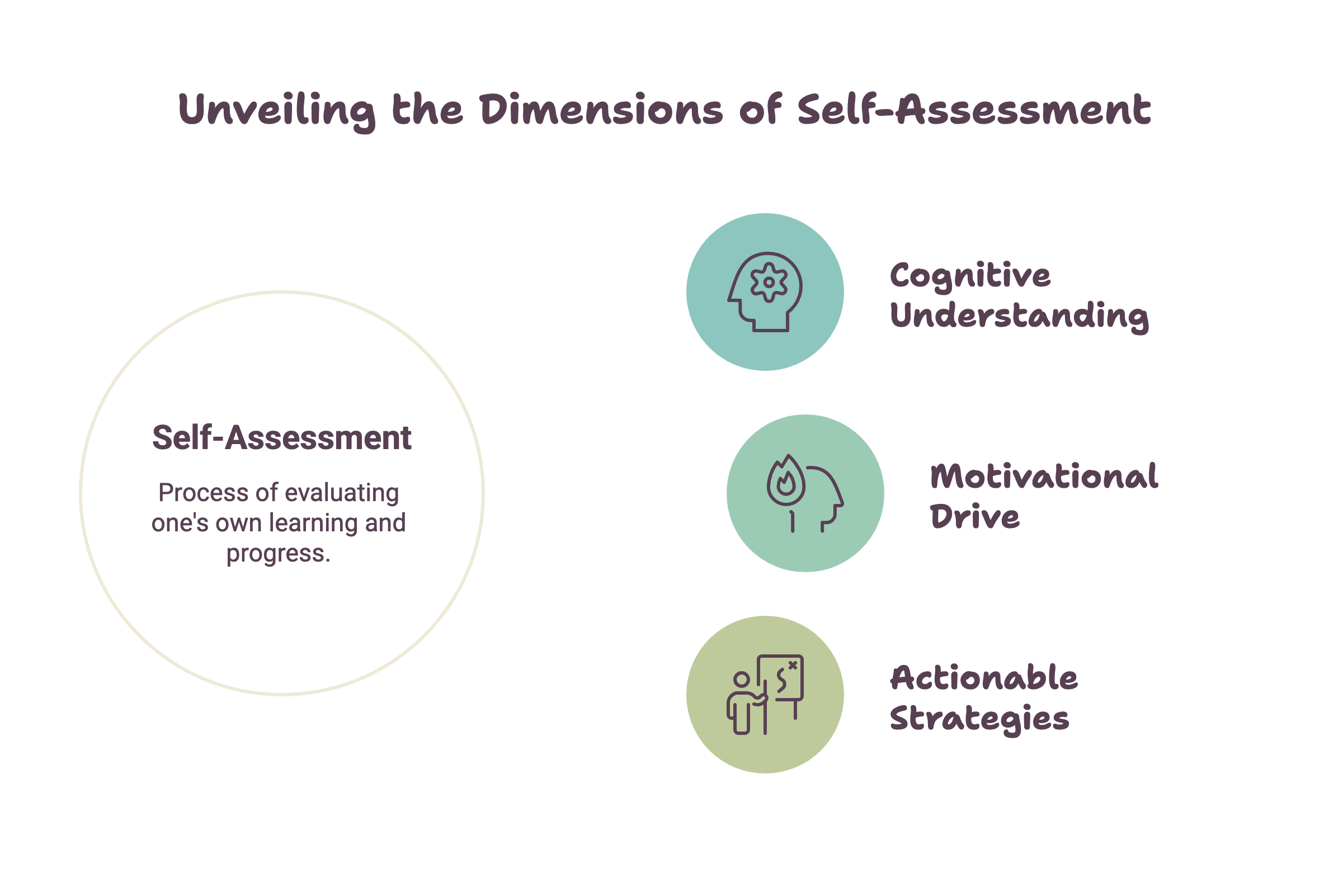
Across this module, we've built the case for why self-assessment matters, what it actually requires cognitively, and what has to be true motivationally for students to act on it. None of these three pieces work well in isolation — a student needs to notice something about their own learning, understand what that noticing means, and care enough to act on it. In Module 2, we'll move from this research foundation into the practical strategies that put all three of these pieces to work in your classroom.